



























The 7th Rwanda Demographic and Health Survey (RDHS) has shown that stunting in Ngoma District decreased from 37.3% in 2020 to 26.9% in 2025.

The survey aims to assess the progress the country has made in improving the population’s living standards and health, in order to inform planning and policymaking.
The 6th Demographic and Health Survey, conducted in 2019/2020, had indicated that in the Eastern Province, Ngoma District was lagging behind in the fight against stunting, with a rate of 37.3%.
The 7th survey revealed that the prevalence of stunting among children under five years of age in Rwanda stood at 27% in 2025. This represents a 6% reduction, as the previous survey of 2019/2020 had placed the figure at 33%.
The findings of this survey, released on 17 December 2025, further showed that Ngoma District reduced stunting by 10.4%.
These results highlight the significant progress made in improving child nutrition and health in Ngoma District.
The Minister of Health, Dr Sabin Nsanzimana, commended the results of the 7th Demographic and Health Survey, emphasizing that there are three key pillars that require special attention.
He said, “Teenage pregnancies are a major challenge that we must address. This is linked to the number of neonatal deaths, where no positive change has been recorded. For us, this is an area that requires strong focus.”
Dr Nsanzimana added, “Another issue is stunting. Looking at the trend, there has been a reduction of about 1% per year. This is not a significant difference compared to ten years ago, yet our target is a reduction of 3% per year. We need to intensify our efforts.”
Under the Government’s Second National Strategy for Transformation (NST2), stunting is expected to decline from 33% in 2024 to 15% by 2029.
Factors that helped Ngoma reduce stunting
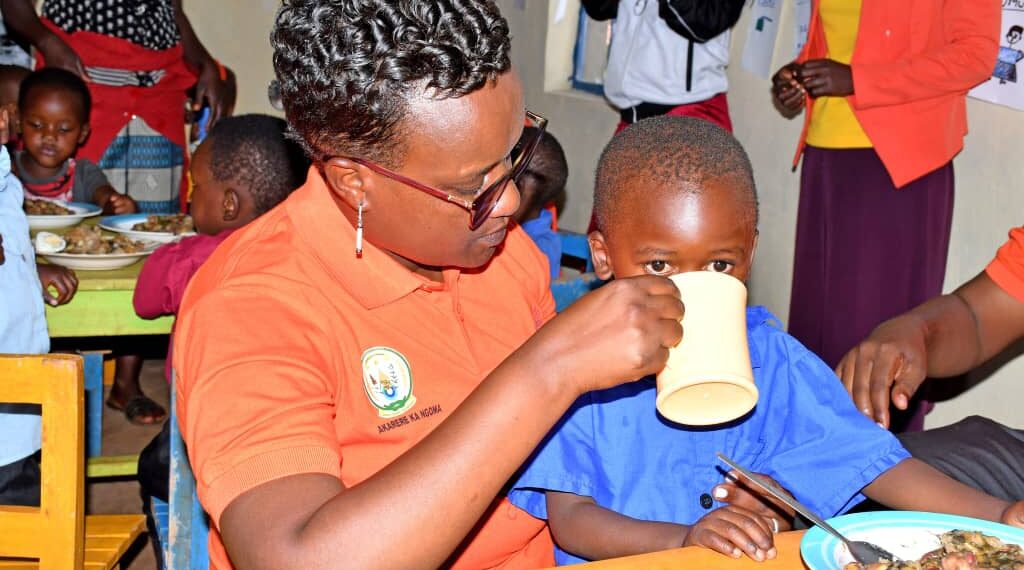
In Ngoma District, the reduction in stunting has been supported by the implementation of programs that educate citizens on the preparation and provision of a balanced diet, hygiene and sanitation practices, the expansion of Early Childhood Development (ECD) centers, child care services, and support to pregnant women to ensure access to essential nutrients (such as fortified porridge flour). Efforts to prevent family conflicts and other related interventions have also played a role.
Statistics show that out of 38,954 children in the district who have reached ECD age, 37,456 children, representing 96%, are enrolled in ECD centers.
These 37,000 children attend 1,083 ECD centers across Ngoma District, including 9 model ECD centers, 946 home-based ECD centers, 52 community-based ECD centers, and 76 ECD centers affiliated with schools.