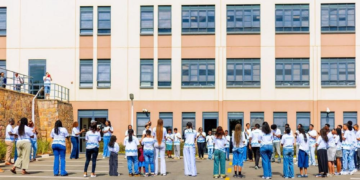










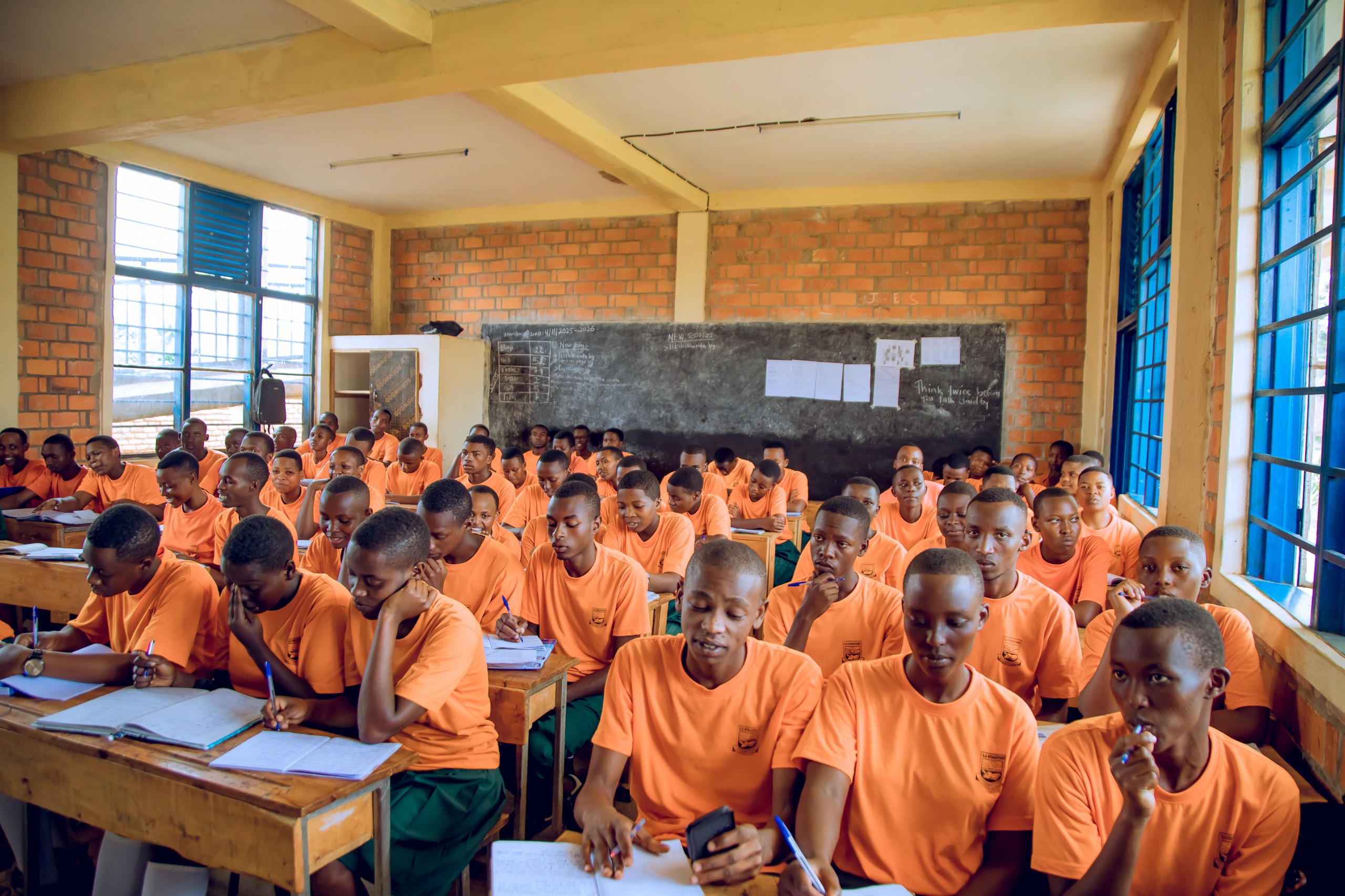
Statistics released by the Ministry of Education show that 35% of all Rwandans are currently seated in classrooms and receiving education at different levels of schooling. However, there is a target to increase this proportion to 65% by the year 2029.

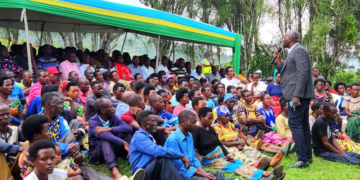
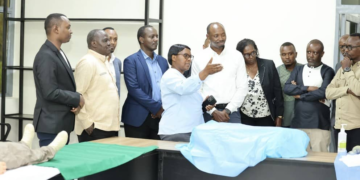
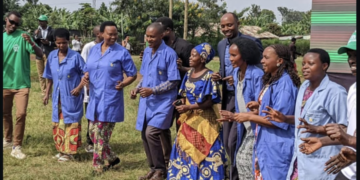
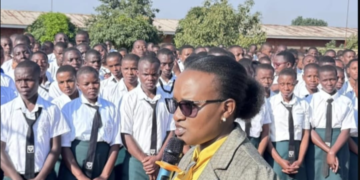
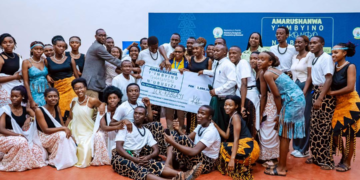
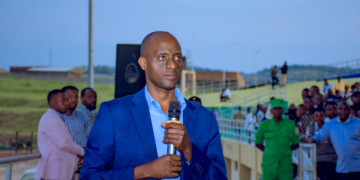
The Ministry of Education highlighted these figures on 12 December 2025 during the celebration of Teachers’ Day, which at the national level was held in Kirehe District.
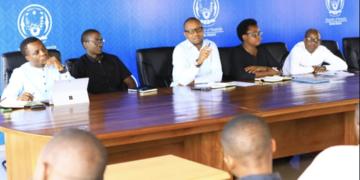
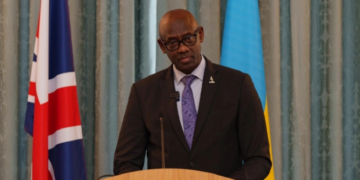
Speaking about the state of education in Rwanda, the Minister of State in the Ministry of Education, Irere Claudette, noted that Rwanda’s population currently stands at 13,550,000. Of this total, 35% are enrolled in school. When calculated carefully, this represents 4,766,125 learners studying at different levels of education.
Among these 4,766,125 learners, 605,229 are enrolled in pre-primary education, 3,000,709 are in primary schools, 598,806 are in lower secondary education, while 196,384 are in upper secondary education.
The figures further show that 116,791 students are enrolled in Technical and Vocational Education and Training (TVET) institutions, 12,423 are studying in short-term TVET programs, while 15,543 are enrolled in higher-level TVET institutions (polytechnics).
In addition, 114,931 students are enrolled in higher learning institutions and universities, while another category of more than 99,255 learners are enrolled in adult literacy programs.
The Ministry of Education also indicates that in primary schools, the highest number of learners is found in Primary One, with 746,241 pupils. Similarly, in secondary schools, Senior One has the highest enrollment, with 218,074 students.
How many teachers teach these students?
Rwanda has a total of 133,029 teachers, including 117,839 classroom teachers and 15,190 school administrators.
Gasabo District has the highest number of teachers, totaling 6,338, while Nyarugenge District has the fewest, with 2,795 teachers.
Among teachers in Rwanda, 69% hold an upper secondary school certificate (A2), 21% hold a bachelor’s degree (A0), and 10% hold a diploma (A1).
Female teachers with an A2 qualification number 43,398, while male teachers are 27,613. Female teachers holding an A1 qualification are 3,644, compared to 7,023 male teachers.
Among those holding a bachelor’s degree (A0), female teachers number 7,728, while male teachers are 13,419.
Regarding school leadership, Ministry of Education statistics show that 74% of schools in Rwanda are led by men, with 2,345 male head teachers, while women head 734 schools, representing 26%.
Kirehe District performed well in student success rates during the 2024–2025 academic year, earning an award for excellence after achieving a 97% pass rate. In contrast, Nyaruguru District ranked last, with a pass rate of 65%.
In the national examinations concluding lower secondary education, Kirehe District ranked first with a pass rate of 93%, while Musanze District ranked last with a pass rate of 49%.
In the national examinations concluding upper secondary education, Kayonza District emerged as the best performer with a 97% pass rate, while Kamonyi District recorded a pass rate of 85%.
Recently, AGACIRO PRESS conducted an analysis on the reduction of unemployment in Rwanda, showing that individuals who studied technical and vocational education are more likely to access the labor market than those who did not. This aligns closely with the second five-year Government of Rwanda program (2024–2029) in the education sector. The key objectives include continuing to improve the quality of education at all levels, strengthening the quality of TVET and higher education to match labor market needs.
Over the same five-year period, programs aimed at adult education will be improved, efforts to ensure school-age children enroll in school and remain in education will be strengthened, and measures to address school dropout will be reinforced.
The government states that to achieve these goals, it will continue promoting inclusive education and improving the quality of education at all levels. In particular, the number of children enrolled in pre-primary education will be increased from 35% to 65%. This will be accompanied by the construction of school infrastructure, an increase in the number of qualified teachers, and the provision of essential teaching and learning materials.