



























The Karongi District administration has announced plans to begin the local multiplication of certified, high-quality Irish potato seeds, a move aimed at increasing agricultural productivity, strengthening food self-sufficiency, and improving the socioeconomic well-being of residents.

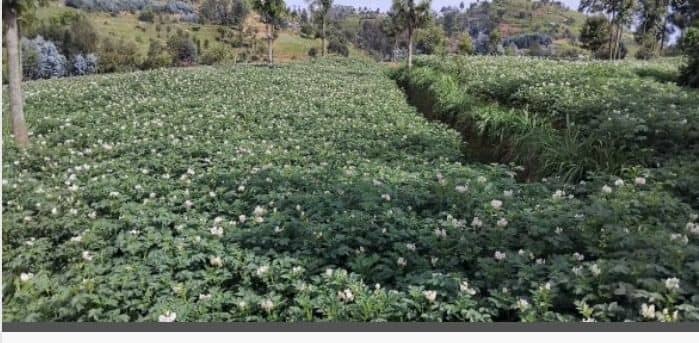
During the 2026A agricultural season, district leaders encouraged farmers to adopt Irish potato farming, citing the crop’s short maturity period and high yield potential. The initiative followed extensive community sensitization campaigns and study tours, which revealed that many residents were unaware that Karongi’s soils are suitable for Irish potato cultivation. This lack of awareness had long forced the district to rely on supplies from neighboring districts such as Rutsiro and Musanze.
A district-wide assessment later established that the main obstacle was not soil infertility, but the widespread use of uncertified and low-quality seeds, which significantly limited productivity.
To address this challenge, the district mobilized residents to pool financial contributions, which were matched by development partners. This effort enabled the purchase of 78 metric tons of certified Irish potato seeds sourced from Nyaruguru, Musanze, and Nyabihu districts. However, due to long-distance transportation, the final cost increased by 40 Rwandan francs per kilogram upon delivery to Karongi.
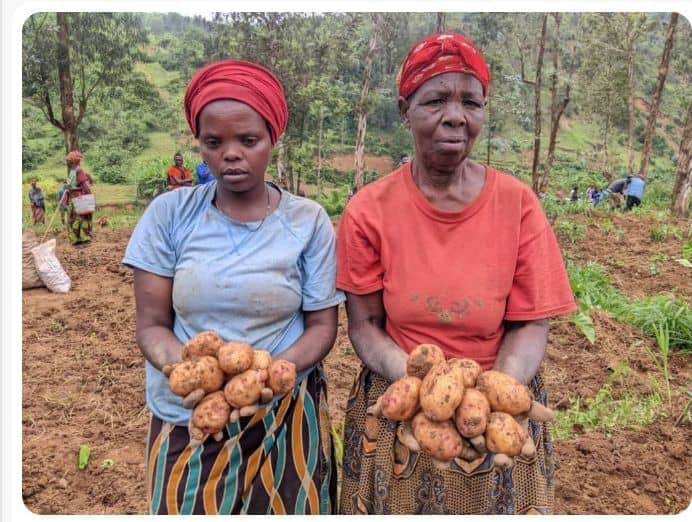
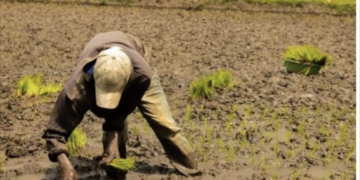
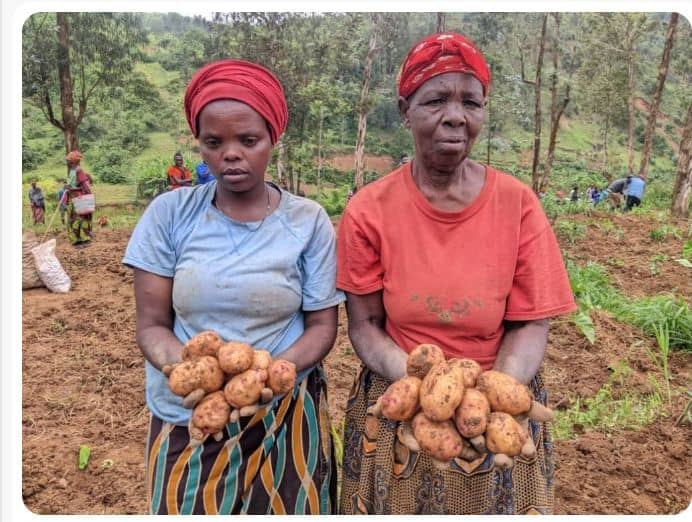
The impact of the initiative is already evident at the household level. Alphonsine Kankindi, one of the beneficiary farmers, planted 200 kilograms of Irish potato seeds on land that previously produced only 40 kilograms of beans. She harvested 1.3 metric tons of Irish potatoes, generating significantly higher income.
“I realized that Irish potatoes are far more profitable,” Kankindi told IGIHE. “A kilogram currently sells at 350 Frw, meaning my harvest earned about 455,000 Frw. Previously, the same land produced beans worth only 40,000 Frw, even when sold at 1,000 Frw per kilogram.”
Fidèle Dushimimana, Country Director of Food for the Hungry (FH Rwanda)—an organization that supplied 15.5 metric tons of Irish potato seeds to Karongi farmers—welcomed the positive results and confirmed plans to support local seed multiplication within the district.
“These seeds were transported from distant areas such as Nyaruguru and Rubavu, which significantly increased costs,” he said. “Our goal now is to help farmers multiply Irish potato seeds locally, reducing reliance on external suppliers and lowering transportation expenses.”
The Deputy Mayor in charge of Economic Development, Ntakirutimana Julienne, said the district’s decision to promote Irish potato farming was driven by the crop’s versatility and rapid growth cycle.
“We found that Irish potatoes mature within 2.5 to 3 months and can be consumed in many forms—boiled, fried, mashed, with or without sauce,” she explained. “Because this crop was not traditionally grown in Karongi, all 88 administrative cells established school-based demonstration gardens to serve as learning hubs where residents could gain hands-on farming experience.”
According to district data, Twumba Sector recorded the highest yields, reaching 16 metric tons per hectare, up from the previous average of 12 metric tons per hectare. Similar improvements were observed in Twumba Cell, signaling a significant increase in productivity across the area.
District officials say the results validate their strategy and reinforce plans to scale up local seed multiplication, positioning Irish potato farming as a key driver of income growth, food security, and sustainable development in Karongi District.