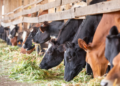

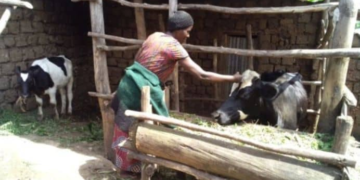











A total of 12,071 households in Karongi District have received cows through the Girinka Munyarwanda Program, a flagship initiative launched under the leadership of Paul Kagame. Beneficiaries say the program has played a key role in lifting families out of poverty by improving nutrition, boosting farm productivity, and creating sustainable income.

Many residents credit the program with transforming their livelihoods and strengthening food security across the district.
From Poverty to Productivity: Vincent Bamporiki’s Journey
Vincent Bamporiki, a resident of Twumba Sector, received his first cow in 2009. At the time, he owned no livestock and struggled to make ends meet, harvesting barely five kilograms of beans due to lack of fertilizer.
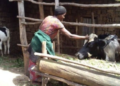
After his cow began producing milk and giving birth, his situation gradually improved. Today, he milks between seven and twelve liters daily.
“I keep some milk for my family and sell the rest. From the income, I earned about 300,000 Rwf, which helped me buy mineral fertilizer and improve my harvest,” he said.
By reinvesting his earnings and passing on a cow to another beneficiary, Bamporiki expanded his livestock activities. He now owns land worth 12 million Rwf and has moved from a fragile mud house into a modern cemented home with electricity.
Livestock Farming Opens New Economic Opportunities
Through careful management, Bamporiki built wealth from livestock. He sold male calves for income and retained healthy female calves for breeding. Today, he owns two cows descended from the original Girinka cow, as well as five pigs valued at more than 800,000 Rwf in total.
A father of five children aged between three and 22, he says the program has given his family long-term stability.
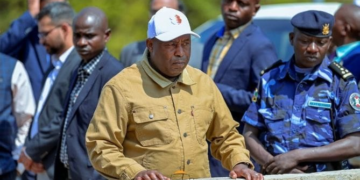
“When we speak about the achievements President Kagame has brought to us, we become emotional. Girinka helped us reach where we are today, and we will continue to protect this progress,” he said.
Improved Harvests and Food Security for Families
Clémentine Mukeshimana from Rubengera Sector, who received her cow in 2018, also testified to the program’s impact.
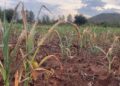
“I used to buy fertilizer worth 15,000 Rwf, but my harvest remained low. Where I used to harvest 50 kilograms of beans, I now harvest 200 kilograms,” she explained.
Thanks to organic manure from her cow, her soil fertility improved, leading to higher yields and better household food security. Like many beneficiaries, she says the program has helped her overcome chronic poverty.
Local Authorities Praise Social and Economic Impact
According to Karongi’s Vice Mayor in charge of Social Affairs, Pascasie Umuhoza, the Girinka Program has significantly improved living standards.
Speaking to IGIHE, she said beneficiaries now benefit from manure, increased agricultural output, income from milk sales, and reduced malnutrition.
“Some residents have purchased farmland and forests, while others have renovated their houses. Many are now able to save, pay health insurance, and cover school fees for their children,” she noted.
Meanwhile, the Ministry of Agriculture and Animal Resources has confirmed that the Girinka Program will continue in the 2025/2026 fiscal year, with at least 1 billion Rwf allocated to support its implementation.
Officials say the sustained investment will ensure that more vulnerable households benefit from livestock farming and move toward self-reliance.