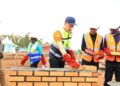
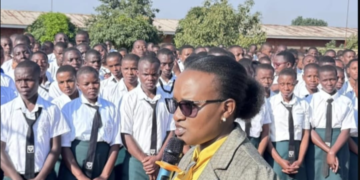











To address the problem of overcrowding in schools and long walking distances for some students, the Gatsibo District five-year development plan (2024–2029) includes the construction of 1,030 new classrooms. These will supplement the existing ones and further strengthen the quality of education the district aims to provide.

A total of 197 preschool classrooms will be built, in line with the national target that at least 60% of children should start school after attending early childhood education. Another 833 regular classrooms will also be constructed, along with plans to renovate and expand ADEG Gituza, a school known for its historical significance in the district.
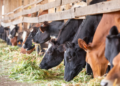
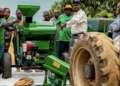
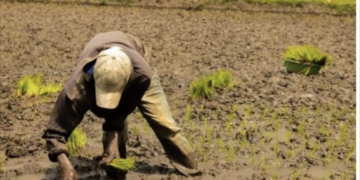
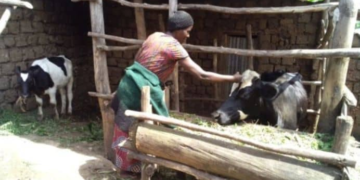
Beyond education, the district plans to invest in agriculture and livestock development over the next five years. This includes constructing 44 drying shelters to improve post-harvest management and continuing the fertilizer subsidy program to boost productivity. Two new milk collection centers will be built in the sectors of Gitoki and Muhura, where none currently exist. Additionally, 18 kilometers of feeder roads will be constructed to help farmers transport their produce to the market.
In the business sector, the district, in partnership with private investors, plans to renovate old markets, including those in Rwagitima, Kabarore, Muhura, Kiramuruzi, and Ngarama—renovation works have already begun. A new bus station (gare) will also be constructed in Ngarama Sector to ease public transport.
Regarding infrastructure, the district plans to construct the Bukomane–Nyarukoni road, linking Gatsibo to the main Nyagatare–Gicumbi highway. Another road, Ndatemwa–Muhura–Burimbi, will connect Gatsibo to Gicumbi District.
A road linking Gatsibo to Kayonza will also be constructed, starting from Rugarama center, passing through Kanyangese and ending in Karambi. Additional roads will branch from the main road from Nyagahanga, passing through Mugisiza to Rwagitima, as well as internal roads connecting urban centers and trading areas in Kabarore, Kiramuruzi, and Ngarama.
In health, Ngarama Hospital is currently undergoing expansion, with the first phase nearing completion and the second phase expected to start soon. The district also plans to build new health posts in the eight villages that do not have one. Every health center will also be required to have a maternity waiting home.
For water and sanitation, the district’s goal is to ensure that every household is within 500 meters of clean water. This will be achieved through major projects, including the expansion of the Gihengeri water treatment plant and the construction of the Muhazi water plant.
The five-year development plan also aims to ensure that every household in designated settlement areas has access to electricity. Through projects such as RUEP, it is expected that by the end of the 2025–2026 fiscal year, approximately 35,962 households will have been connected to the national electricity grid.
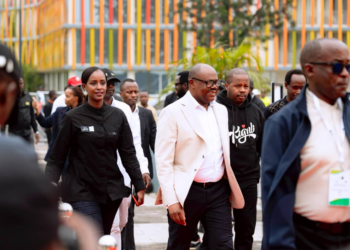
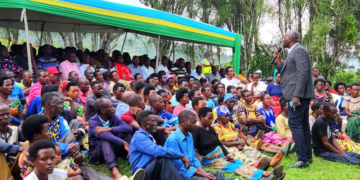
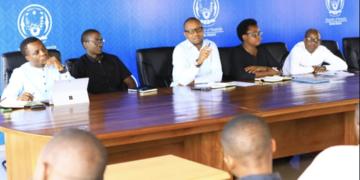
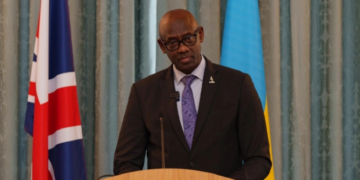
Gatsibo District Mayor, Gasana Richard, urges residents to work without waiting for constant external support, emphasizing that some activities—such as maintaining cleanliness and striving for personal development—do not require government funding.
He said:
“Everyone must understand that what they already have can be a foundation for their own development. We encourage citizens to build a culture of self-reliance. As the saying goes, ‘help from outside comes after the rain.’ We should know that support will eventually come, but we must first ask ourselves, ‘What can I do with what I already have?’ Support becomes more meaningful once you’ve made your own effort. This is the kind of leadership the Head of State wants—where everyone uses what they have as a stepping stone out of poverty.”
The district’s five-year development program includes 204 performance targets across various sectors. In economic development, there are 86 targets; in social welfare, 85; and in good governance, 33.
Under the second National Strategy for Transformation (NST2), the economic pillar is expected to contribute to Vision 2050 by promoting global competitiveness, regional integration, wealth-creating agriculture, and modern urbanization.
Key national economic benchmarks for NST2 include achieving 6% average growth in the agriculture sector, reaching 10% growth in the industrial sector, creating 1,250,000 productive jobs, and increasing private sector investment from the current 15.9% of GDP (equivalent to USD 2.2 billion) to 21.5% of GDP (equivalent to USD 4.9 billion).