
















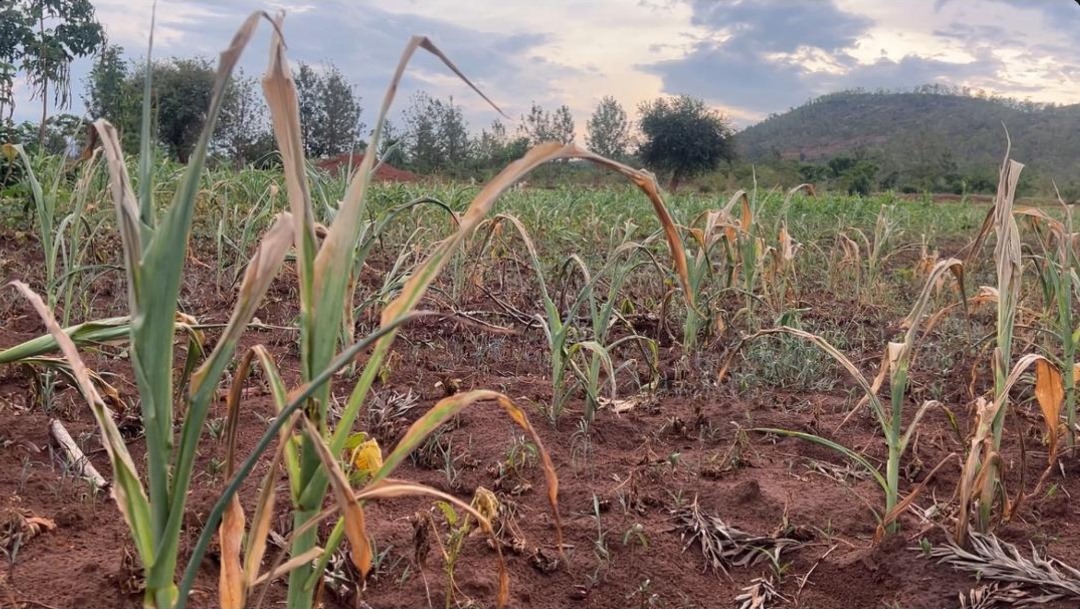
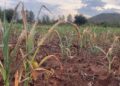
The Government of Rwanda, in partnership with various development partners, has confirmed that there is a plan to invest more than 300 billion Rwandan francs in irrigation projects. Once fully implemented, these projects are expected to provide a lasting solution to recurrent drought in districts of the Eastern Province, which is largely caused by prolonged sunshine and low rainfall.

In the first phase, these funds will be invested in Kayonza District, specifically in the sectors of Ndego and Kabare, where the KIIWP (Kayonza Irrigation and Integrated Watershed Management Project) will be launched. The project will irrigate more than 4,000 hectares of land using modern pivot irrigation systems.
So far, contracts have already been awarded for over 2,000 hectares, while the remaining 2,000 hectares are still at the planning stage, according to the Project Manager of KIIWMP in charge of these activities, Uwitonze Théogène.
He said:
“The Government of Rwanda has decided to permanently address the problem of drought. In the second phase of this project, we are focusing mainly on irrigation activities, especially in Ndego. The government plans to irrigate about 4,000 hectares using modern technology, particularly rotating irrigation systems known as pivots. The feasibility studies have been completed, and we have started the procurement process. We have already awarded a contract to irrigate 2,400 hectares, while the remaining 2,000 hectares are still under study. Once completed, all these hectares will solve the drought problem in this area.”
This project will run for a period of six years and is expected to cost 205 million US dollars, which is equivalent to nearly 300 billion Rwandan francs.
The project will mainly focus on the sectors of Ndego and Kabare in Kayonza District, areas that are frequently affected by severe drought.
Speaking on whether this budget is sufficient, Uwitonze Théogène said:
“During the six years planned for the implementation of this project, the drought problem in this area will be fully resolved. The project is expected to be completed by 2031. However, even within these six years, we are prepared for some components of the project to begin early. Construction is expected to start in the first and second months, and by September next year, where works are completed, farming activities will begin.”
One of the new features of this second phase—unlike the first phase which did not perform well—is that irrigation will also be extended to hilly areas.
He explained:
“Based on feasibility studies, we will bring in large machines capable of pumping water from lakes and lifting it up to the hills. From there, the water will flow downhill to irrigate farmland. We plan to turn the intense sunshine, which used to be a problem, into a solution by using solar energy to pump the water up to higher elevations. This will allow irrigation not only near the lakes, but also across the surrounding hills.”
The water is expected to be sourced from Lake Nasho, Lake Kibare, and Lake Ihema. In addition, 50 greenhouses will be constructed, creating jobs for more than 400 people, mainly youth.
The project will also extend to other areas, including Gishanda in Rwinkwavu, where 200 hectares will be irrigated, and Kanyeganyege, where works have already started. In the sectors of Kabarondo and Ruramira, irrigation will cover an area of 150 hectares.








I’m pleased to hear that government of Rwanda is seriously finding how to address the problem of droughts caused by prolonged sunshine and low rainfall. Droughts negatively affect the welfare of Rwandans.