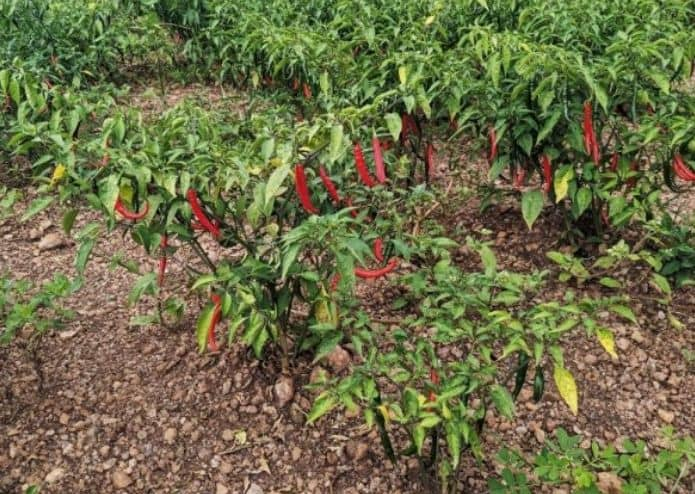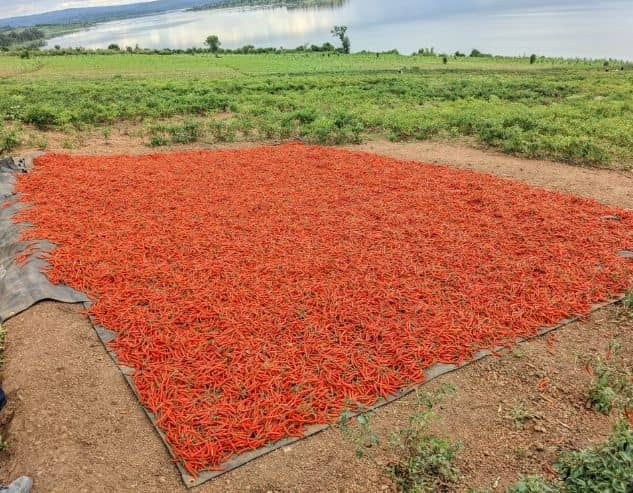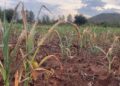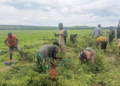









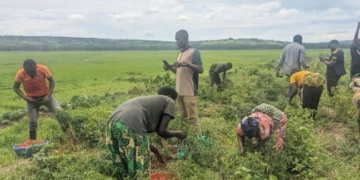

















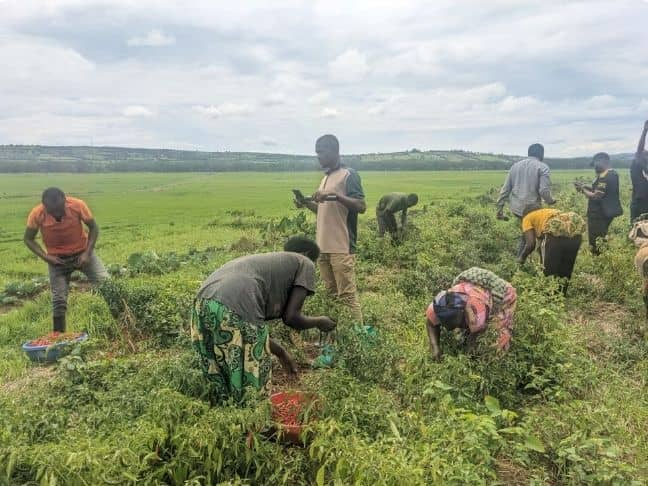
Chili farmers in Bugesera face heavy losses because they lack proper drying facilities. Without these, they dry chili on the ground, which reduces quality and productivity.

Inspection of New Drying Facilities
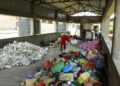
On April 1, 2026, farmers visited drying facilities under construction in Bugesera and Nyagatare districts. They hope these facilities will solve the post-harvest challenges.
Farmers Share Their Experiences
Mugabo Alain, a chili farmer from Bugesera cultivating 15 hectares, lost 3 million Rwandan francs due to poor drying facilities. He said:
“Chili farmers face many challenges that cause harvest losses. Normally, we harvest twice a year, but during that period, I lost 3 million francs because we piled the produce together, and it spoiled.”
He added that chili farming needs a lot of inputs, such as sufficient water and proper drying facilities. “Last harvest, we collected two tons, but much spoiled because it was stacked together,” he said.
Similarly, Hakizayezu Wellars from Nyagatare District said production costs are higher than the market price:
“We are paid 500 francs per kilogram, but harvesting costs make it hard to cover expenses. We need to make a profit too.”
ALSO READ:https://agaciropress.com/mayaga-genocide-memorial-ruhango/
Hope for New Facilities
Farmers believe the new drying facilities in Bugesera and Nyagatare will help them reduce post-harvest losses. Proper drying will improve the quality and market value of their chili.
Project Goals and Management
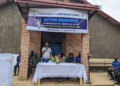
Rusingizandekwe Aimable, Project Manager for the Sustainable Food Value Chain and Market (SFVCM) initiative, said:
“The project aims to reduce losses caused by the lack of chili drying facilities. It will help farmers dry chili and onions properly, preventing spoilage.”
He added that the Kigali facility will focus only on chili. Other facilities in Bugesera, Rulindo, Nyagatare, and Rubavu will dry both chili and onions at different times.
Expected Impact on Post-Harvest Losses
The National Agricultural Export Development Board (NAEB) expects chili losses to drop from 17.2% to 8.7%, and onion losses from 15.4% to 7.7%. The facilities should be operational by the end of the year.
Partnership and Funding
The SFVCM project is funded by the Rwandan government and the Republic of Korea. NAEB implements it to strengthen the agricultural value chain, improve farmer incomes, and provide high-quality produce for local and export markets.