





























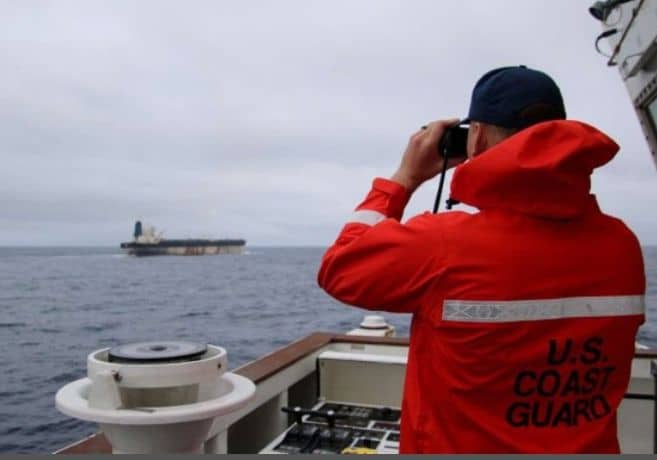
The UK Ministry of Defence has confirmed that British forces provided support to a United States military operation that intercepted and seized a Russian-flagged oil tanker in the North Atlantic Ocean on Wednesday. The vessel, formerly identified as the Bella 1 and now renamed Marinera, was taken during efforts to enforce U.S. sanctions linked to illicit oil trade involving Venezuela, Iran and Russia.

According to U.S. authorities, the tanker was intercepted after a weeks-long pursuit as part of efforts to disrupt sanctions-evasion networks. The U.S. Department of Defense and related agencies said the operation targeted a vessel allegedly involved in transporting oil in violation of American sanctions.
In a public statement, the UK Ministry of Defence said its involvement came at the formal request of Washington and included pre-planned operational support, such as Royal Air Force surveillance and logistical assistance at sea. A Royal Navy supply ship also supported U.S. forces during the interception, although no British personnel took part in boarding the tanker itself. Defence Secretary John Healey described the collaboration as part of an international effort to tackle sanctions evasion and reaffirmed that UK support was provided in full compliance with international law.
“Our British armed forces demonstrated exceptional skill and professionalism in assisting the United States to detain the Bella 1 tanker while it was en route to Russia,” the UK defence statement said, framing the action as a joint effort to combat illicit maritime activity.
U.S. officials emphasized that the seizure was aimed at disrupting illicit oil movements tied particularly to Venezuelan operations and broader sanctions enforcement. The operation was coordinated under a U.S. federal court warrant and involved tracking the vessel across international waters before U.S. forces brought it under control.
Russia has acknowledged the interception but strongly condemned the action. Moscow’s Ministry of Transport said the tanker had been granted temporary authorization to fly the Russian flag in late December 2025 and accused the United States of violating the United Nations Convention on the Law of the Sea, particularly provisions guaranteeing freedom of navigation in international waters. The Russian statement criticized the use of force against a vessel it considers lawfully registered.
The incident marks a significant moment in ongoing tensions over sanctions enforcement and maritime security, with diplomatic repercussions likely as both sides defend their interpretations of international law.