





















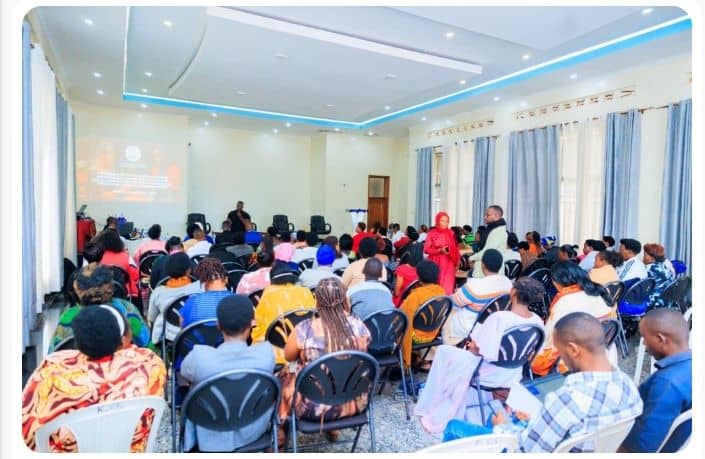
The National Bank of Rwanda (BNR) has reported that its initiative aimed at promoting women’s adoption of mobile phone based financial services, known as Gendana Konti, has reached more than 122,000 women across the country, with over 30,000 of them having been registered for Mobile Money services.

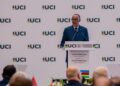
The announcement was made on 23 December 2025, during the launch of a women-focused digital payment awareness campaign in Kirehe District, under the Gendana Konti initiative, a program designed to support women’s financial empowerment, self-reliance, and increased access to mobile-based financial services.
ALSO READ: Eastern Province: Government to invest over 300 billion RWF to combat drought
Gender Gap in Mobile Payments Usage
BNR data indicates that 72% of women use mobile phones for payments, compared to 81% of men. The bank identified key barriers to women’s participation in mobile payments, including limited digital literacy, particularly insufficient knowledge in mobile phone use, alongside other socio-economic challenges that continue to restrict broader adoption.
Training and Onboarding Achievements
BNR further reported that 122,545 women have received financial digital literacy training through this initiative, with 32,353 of them who had no prior exposure to Mobile Money successfully onboarded into the service. The beneficiaries come from the districts of Nyaruguru, Nyamasheke, Gisagara, Ruhango, Nyanza, Rulindo, Gakenke, Ngoma, and Nyabihu.
BNR’s Commitment to Women’s Financial Inclusion
The Director General in charge of Financial Stability at BNR, Bernard Nsengiyumva, emphasized the institution’s commitment to expanding women’s use of mobile-based financial services, particularly digital deposits and withdrawals, noting that women remain a cornerstone of household and national development.
He stated, “We recognize the pivotal role women play in socio-economic progress and that family welfare is largely driven by them. When women increasingly adopt mobile financial services, especially digital money transfers, mobile loans, home-based payment of community health insurance, and remote purchase of electricity tokens, it not only saves time and reduces physical constraints but also contributes meaningfully to Rwanda’s national development agenda.”
Government Support and Cost Considerations
Nsengiyumva added that the Government of Rwanda is committed to increasing women’s access to financial services through mobile platforms, as a way to reduce the time spent traveling to banks and simplify the process of completing essential transactions.
He also stressed that transaction fees associated with digital financial services should not be used as a justification for low adoption, noting that the costs remain relatively affordable when compared to alternative service channels that often require more time and additional expenses.
Women’s Experiences with Mobile Money
Mukaniyibizi Immaculée, a resident of Kankobwa Cell in Mpanga Sector, Mpanga District, said she already uses Mobile Money for both deposits and withdrawals, highlighting that the service has significantly eased her access to a wide range of financial utilities.
She remarked, “Women who have not yet understood the value of Mobile Money often lack digital knowledge or access to mobile phones. We are now determined to teach them how to use Mobile Money and demonstrate how it can help them complete financial transactions more easily and access services more conveniently.”
Challenges Facing Older Women
Mujawimana Esperance, a resident of Gatarama Cell in Kigina Sector, noted that challenges in adopting mobile-based financial services persist, particularly among older women who struggle to memorize their PIN codes, a factor that continues to limit effective use of Mobile Money and other digital financial platforms.
Community Advocacy and Peer Training
Murereyimana Gloriose, from Mushikiri Sector, explained that having her bank account linked to her mobile phone has helped her avoid long and costly journeys to withdraw money. She added that although she already uses her phone to make different digital payments, she is now committed to increasing efforts to train other women in her community.
She stated, “For women who have not yet embraced this service, the most urgent need is awareness and practical guidance, teaching them how to use mobile financial services so they no longer have to carry cash, which often exposes them to security risks and other avoidable difficulties. We are now determined to extend this campaign to many more women across rural communities.”
Local Government Support and Recommendations
The Deputy Mayor for Economic Development in Kirehe District, Modeste Nzirabatinya, commended the Gendana Konti initiative, describing it as a strategic program expected to reach a larger number of women, particularly those actively engaged in community savings groups (ibimina) as well as small-scale commerce and entrepreneurial activities.
Nzirabatinya further highlighted that over 65% of the district’s population is female, emphasizing that empowering women is directly linked to accelerating the district’s overall socio-economic development. He also appealed to telecommunication companies to support women who do not yet own mobile phones by providing affordable devices under flexible installment payment plans, enabling them to pay gradually over time.
Future Targets in Kirehe District
BNR has set a target to ensure that at least 15,000 women in Kirehe district receive direct training on mobile-based deposit and withdrawal services. The trained participants will, in turn, serve as community champions, transferring knowledge and skills to many more women across the district to foster wider adoption of digital financial services.