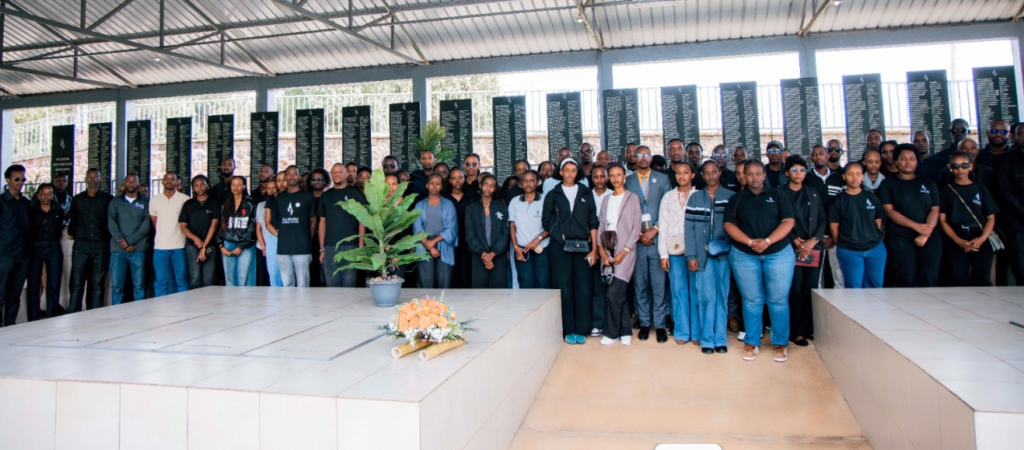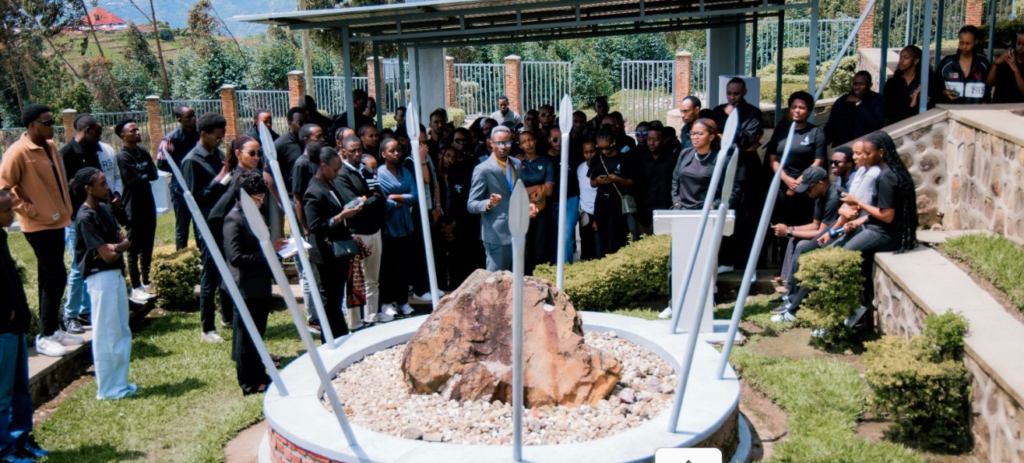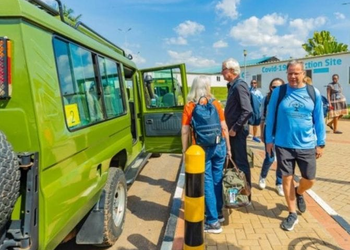





















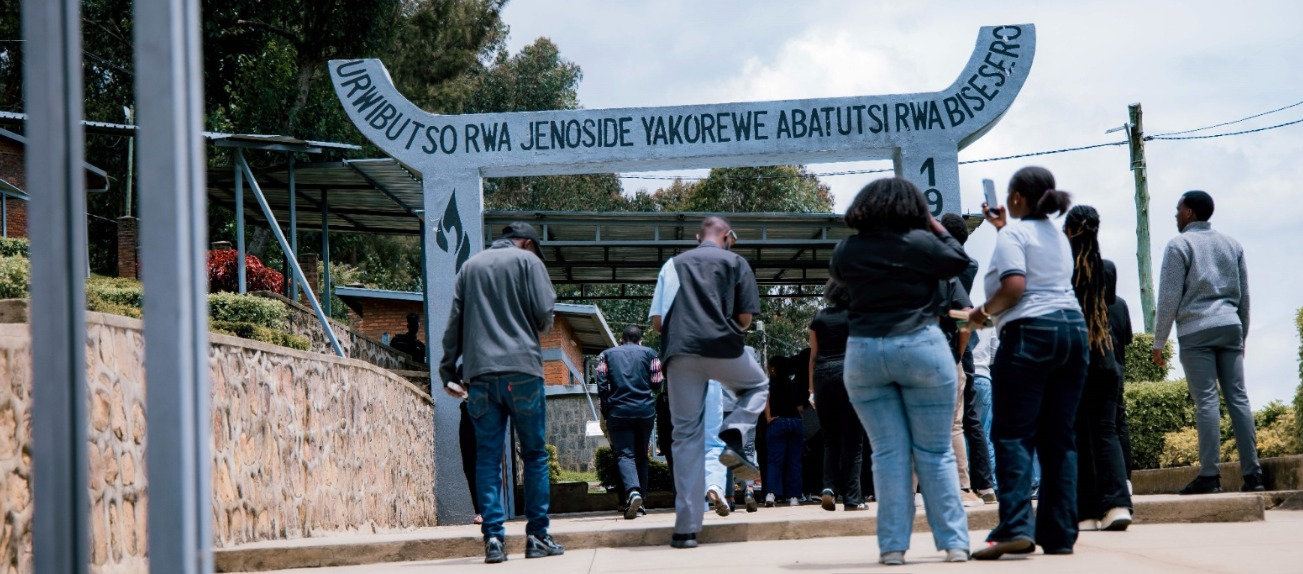
Students of the Adventist University of Central Africa (AUCA) who are part of the youth organization affiliated with the RPF Inkotanyi visited the 1994 Bisesero Genocide Memorial located in the Western Province, Karongi District, Tumba Sector, Gitabura Cell, Kibingo Village. They were warmly welcomed and received detailed information about the history of Bisesero Hill during the 1994 Genocide against the Tutsi. They were informed that the memorial was inaugurated on 7/4/1997, renovated and reopened on 27/6/2014, and inscribed on the UNESCO World Heritage List on 20/09/2023.

ALSO RAD: Minister Addresses Gatsibo Residents at Kiziguro Genocide Memorial _ Dr. Bizimana
Historical Significance of Bisesero and Resistance
The Bisesero Genocide Memorial contains the remains of between fifty thousand (50,000) and sixty thousand (60,000) Tutsis. This large number is explained by two main factors: first, Bisesero was inhabited by more Tutsis than the First and Second Republics claimed; second, Tutsis from across Kibuye gathered there after hearing about the determination of the Bisesero people to resist.
The Tutsis fought on all the hills of Kibuye, including Rwamatamu, Ndoba in Kizinga, and Karongi Hill. Bisesero itself is made up of nine hills: Kigarama, Muyira, Murambi, Gisoro, Jurwe, Kazirandimwe, Gitwa, Uwingabo, and Nyarutovu. Those defeated on one hill fled to Bisesero. The people encouraged unity and resistance, telling others to stay together and fight, even with stones, refusing to die without defending themselves. Their refusal to go to churches, despite government encouragement, also contributed to their survival.
Memorial Symbolism and History of the Site
The students learned that the memorial holds deep symbolic meaning. At the entrance, nine spears surrounding a large stone represent the bravery of the Bisesero people and the nine communes of Kibuye. The design also shows a gradual narrowing space, symbolizing how the number of Tutsis decreased as they were killed while resisting.
Testimony of Courage from Survivor
The students met a survivor, Mukomeza Aron, son of Birara, considered a hero of Bisesero. He shared the story of his father’s courage in encouraging resistance, stating that even without weapons, they would fight and not accept death. Birara was killed after returning to help a crying child.
Commemoration Activities and Tributes
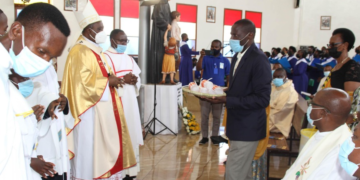
The visit concluded with the laying of flowers on the memorial and at Birara’s family, followed by speeches from student representatives.
Message of Remembrance and Unity
Dr. Charles, representing AUCA, thanked the students for honoring the victims and reminded them of Rwanda’s commitment to unity and resilience, concluding with the message: “Let us remember and rebuild.”